
 7 hours ago
1
7 hours ago
1
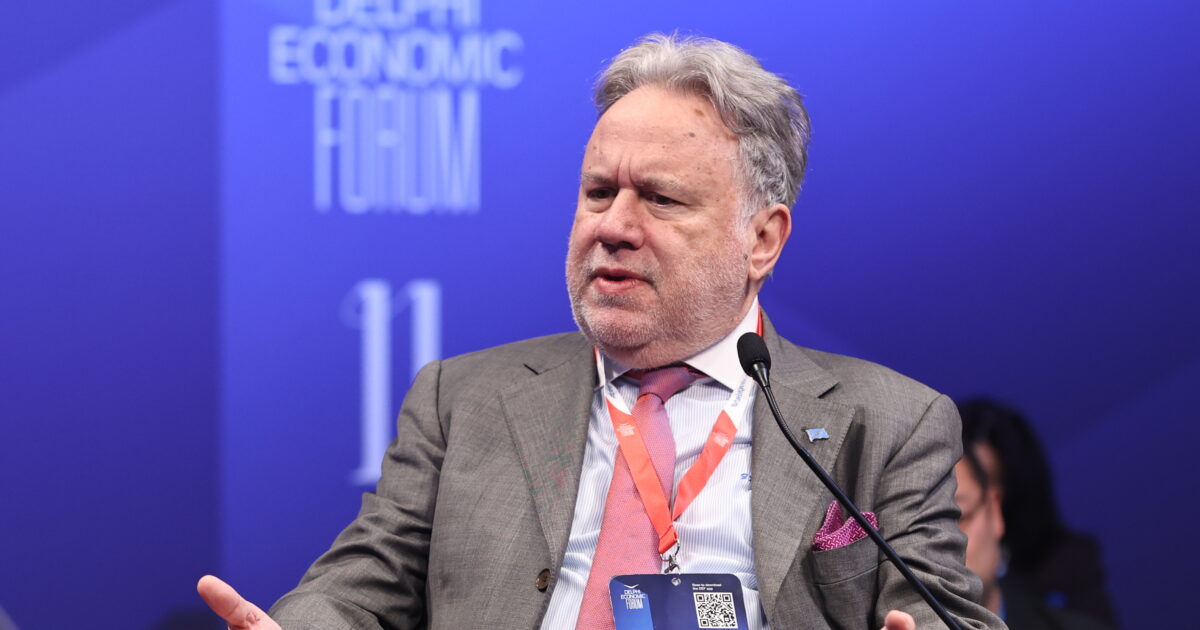
Cosmos Chairman and Chief Executive Dimitris Dafnis presented the Group’s performance and strategic objectives in Greece and Cyprus.
As he said, a total of 3.5 billion euros was allocated to information technology projects in Greece through the Recovery and Resilience Facility. As Dafnis noted, “we are entering a phase where the party is ending. The period during which the ICT sector enjoyed a significant boost and sustained growth is coming to an end. The Information and Communications Technology market is entering a phase of maturity, with Artificial Intelligence emerging as a decisive factor.”
He argued that as the era of fund absorption gives way to an era focused on performance and sustainability—one that concerns not only projects and funding, but also value creation, operation, security, resilience and measurable outcomes—Greece lacks a digital policy framework for the post-RRF environment. At the same time, he said, the country’s ICT sector lacks the institutional representation required to address modern challenges.
Dafnis also highlighted growing concerns among Greek technology companies over sharp price increases in critical categories of technology equipment, exceeding 200% in some cases. According to him, these represent “some of the largest cost increases witnessed in the ICT sector in recent decades.”
To advance to the next stage of technological development, Greece and its ICT market must address key questions regarding how RRF funds were channelled into the economy and how resources were ultimately allocated. Equally important, he said, are questions about who will maintain, upgrade and finance the lifecycle of digital projects in the post-RRF era.
While Greece has made significant progress in digital projects, the digital transformation of public services and the development of the ICT market, it continues to lag in skills development and project governance, he noted.
“The structural weaknesses have not disappeared,” Dafnis said, arguing that fragmentation and poor management of public-sector projects often undermine positive developments in practice.
He cited unclear specifications, delays in decision-making that drive up costs, loss of momentum, technology obsolescence, and a lack of accountability regarding decision-making, data ownership, approvals, project acceptance and operation. He also pointed to projects being delivered without operational frameworks, service-level agreements (SLAs), training, budget provisions, cybersecurity measures, key performance indicators (KPIs) or mechanisms for continuous improvement.
“Such conditions are inconsistent both with the scale of the funding invested and with the capabilities of the technology itself,” he said.
Greek ICT Market Outlook
The Greek ICT market was valued at 9.79 billion dollars in 2026 and is projected to grow at a compound annual growth rate of 12.34% between 2026 and 2031.
By 2031, the market is expected to reach 17.52 billion dollars, with telecommunications remaining the largest segment.
Meanwhile, the Cypriot ICT market, where Cosmos Group maintains a strong presence, is projected to expand to 1.74 billion dollars by 2030 from an estimated 1.61 billion in 2026.
Προτιμώμενη πηγή στην Google
Για να εμφανίζονται περισσότερα άρθρα της Ναυτεμπορικής στις αναζητήσεις σας εύκολα και γρήγορα, πρέπει να προσθέσετε το site στις προτιμώμενες πηγές σας. Μπορείτε να το κάνετε πηγαίνοντας εδώ.






 Greek (GR) ·
  English (US) ·